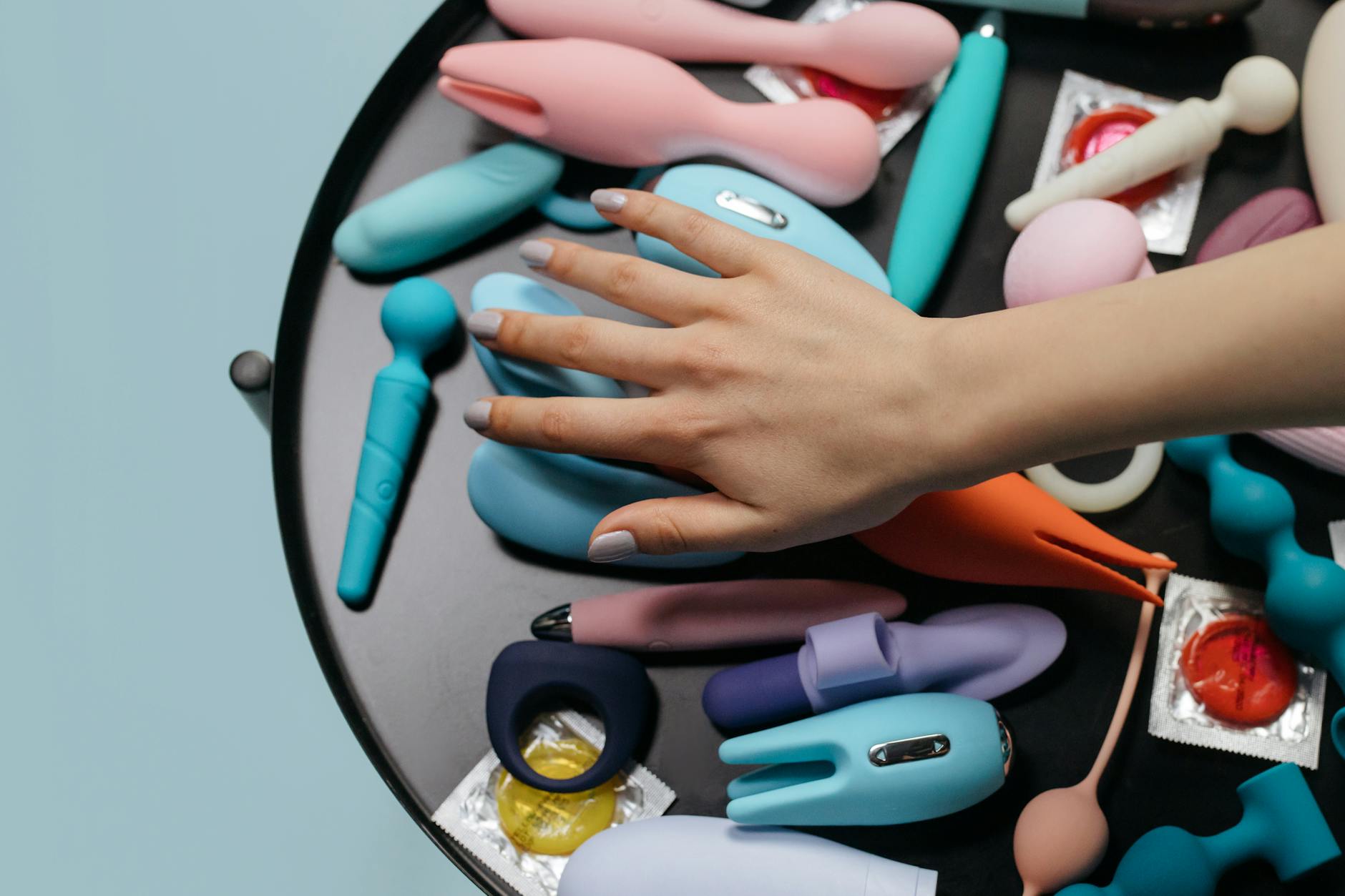
How Lemon Clitoral Vibrators Work for Solo Pleasure After Long-Term Relationship Ends
When a long relationship ends, your body needs permission to feel good again. Here's why lemon vibrators help you rebuild sensation, pleasure, and ownership of your own desire.
When you've spent years having sex with the same person, your body learns their rhythm, their timing, their preferences. You become attuned to someone else's pleasure cycle instead of your own. Then suddenly they're gone, and you're standing in front of yourself again like a stranger.
After a long-term relationship ends, many people report that solo pleasure feels foreign or muted. You touch yourself and nothing happens. Or something happens, but it feels mechanical, like you're going through steps you don't actually remember writing.
Here's what's actually going on. During years of partnered sex, your nervous system learned to depend on external stimulation. Someone else set the pace. Someone else controlled the intensity. Your brain got used to responding to their touch, their timing, their fantasy. When that goes away, your solo pleasure pathways have to rebuild from scratch.
It's not that you've lost the ability to feel good. You've lost the habit of being in charge of your own sensation. And there's a difference between those two things that matters wildly.
A lemon clitoral vibrator like the Lem functions through suction and pulsing, which mimics the way manual stimulation works but with consistency your hand can't deliver. This is important after a breakup for a specific reason. You don't have to think about what comes next. You don't have to manage someone else's experience. You can just feel.
The suction pattern of a lemon vibrator also works differently on your nervous system than traditional vibration does. Traditional vibrators buzz at a consistent frequency. Suction vibrators create a pressure-release cycle that your body recognizes as closer to human touch. This matters when you're rebuilding sensation after years of relying on a partner.
Most people who've used both report that lemon vibrators get them there faster and with less overthinking. Less overthinking is huge after a breakup. Your brain is already running twelve separate emotional loops. You don't need to add "Am I doing this right?" to the list.
There's a difference between being a beginner (you don't know what you like) and starting over (you knew what you liked with someone else and now you're learning what you like alone). After a long-term relationship, you're the second one.
This changes how you approach pleasure. You're not discovering yourself for the first time. You're rediscovering yourself under different conditions. That's subtly different and infinitely more frustrating because you expect your body to remember something it never had to do independently.
When I work with people in this situation, I recommend spending the first few sessions just exploring sensation without the goal of orgasm. This sounds counterintuitive. But your body has been trained to think of pleasure as a duet. You need to retrain it to think of pleasure as a solo performance first.
A lemon vibrator helps because the sensation is distinct enough to interrupt the old patterns. You're not replicating what a partner would do. You're feeling something completely different. This helps your nervous system recognize that this is new territory.
First, do not start on a high setting. Your body is in a rebuilding phase. Pattern 1 or 2 on most lemon vibrators is enough to start. You're training your nervous system to recognize pleasure as your own again, not overwhelming it.
Second, budget time you're not tracking. Set a timer and you've just made pleasure another task on your to-do list. This is the opposite of what you need. Give yourself 20 to 30 minutes with no agenda except being present. Some sessions you'll reach orgasm. Some you won't. Both are data. Both are okay.
Third, add lubrication even if you don't think you need it. After a breakup, arousal takes longer to build. Water-based lube removes friction and lets you focus on the sensation itself instead of logistics. This is not a sign something's wrong. This is completely normal.
Fourth, notice what you're thinking about. After years with a partner, some people find their brain reaches for shared memories or fantasies during solo time. That's fine. Some people find they want completely different fantasies now. That's also fine. You're learning what actually turns you on without someone else's preference in the room.
Reclaiming solo pleasure after a long relationship is partly about physical sensation and partly about reclaiming authority over your own body. For years, your pleasure existed in relation to someone else. Now it has to exist in relation to yourself.
This is not a small thing. I work with a lot of people who, during a long relationship, have actually forgotten what their own desire looks like without someone there to validate it. Using a lemon vibrator becomes a way to practice asking yourself "What do I actually want?" instead of "What does this person want from me?"
The first few times you use one solo, you might feel guilty. Or silly. Or like you're doing something you're not supposed to be doing. These feelings are completely normal and they usually fade by session three or four. Your nervous system is learning that pleasure doesn't require permission from another person anymore.
If and when you decide to be with someone else, the solo foundation you've built matters enormously. When you know what actually feels good to you independently, you can communicate that to a partner. You're not just hoping they figure it out. You're not reverting to the dynamic where their preferences took priority.
Many people find that using a lemon vibrator solo actually improves partnered sex later because they've reestablished the connection between their brain and their body. They know what patterns work. They know what intensity they prefer. They're not starting from scratch with someone new.
This is why I recommend solo exploration before jumping into new partnered experiences. You're not avoiding intimacy. You're building the foundation so that the next intimacy you have is better informed and more genuinely yours.
You'll know you're rebuilding successfully when solo pleasure stops feeling like a grief activity and starts feeling like self-care. When your brain quiets down and your body can just be present. When you can reach orgasm without it being attached to memory or loss.
For most people, this takes somewhere between four to twelve weeks of regular solo time. Everyone's timeline is different. Some people process breakups faster. Some need more time. There's no right speed.
If you're finding that pleasure feels completely numb after several weeks of consistent solo time, that might point to something deeper. Grief, depression, or hormonal changes can all flatten sensation. A conversation with a therapist or doctor can help sort that out. A lemon vibrator is a tool for reconnection, not a replacement for professional support when you need it.
After a breakup, your body isn't broken. It's just learning to exist in a new configuration. A lemon clitoral vibrator becomes a way to have a conversation with yourself about what you actually want, independent of anyone else's needs or timing.
This conversation is one of the most important ones you'll have during recovery. Because the pleasure you build now, solo and intentional, becomes the baseline for every intimate experience that comes after. When you know what feels genuinely good to you, you stop accepting mediocre. You stop performing. You start actually living in your own body again.
That's the real work. And a good lemon vibrator just makes the work feel better.
Completely normal. You've spent years having pleasure that involved another person. Your nervous system has to recalibrate to the idea that solo pleasure is valid and doesn't require anyone's permission. Guilt usually fades after a few sessions as your brain learns that this is self-care, not infidelity or weirdness. You're not betraying anyone. You're healing.
It depends on the person and how long the relationship was. Most people notice significant improvement in sensation and arousal within four to eight weeks of consistent solo exploration. Some people take longer. The key is consistency, not intensity. Regular gentle practice rebuilds your nervous system's trust in solo pleasure more effectively than occasional intense sessions.
Maybe, and maybe not. If you've lost interest because you're grieving or depressed, a vibrator won't fix the grief. But if you've lost interest because sex now feels tied to memories of your ex, exploring solo pleasure with a tool that creates a completely different sensation can help interrupt that loop. If numbness persists beyond a few weeks, talking to a therapist or doctor is worth doing.
No. That's actually counterproductive. You're not trying to recreate partnered sex alone. You're learning what solo pleasure feels like independently. This might mean different patterns, different intensities, different fantasies. Let your body explore what it actually wants instead of replicating the past.
No. It's a sign you're actively engaging with your own recovery. Using solo pleasure as a tool for reconnection is something therapists and relationship coaches recommend. It's self-directed healing, not avoidance. You're practicing agency over your own body, which is exactly what needs to happen after a long relationship.
That's normal and it passes. Your body is relearning something intimate without another person there. Emotions and sensation get tangled up. If you cry or feel sad, that's okay. Your nervous system is processing. If you find yourself consistently using solo time to access grief rather than pleasure, then checking in with a therapist might help you work through the underlying feelings so pleasure can actually be pleasurable again.