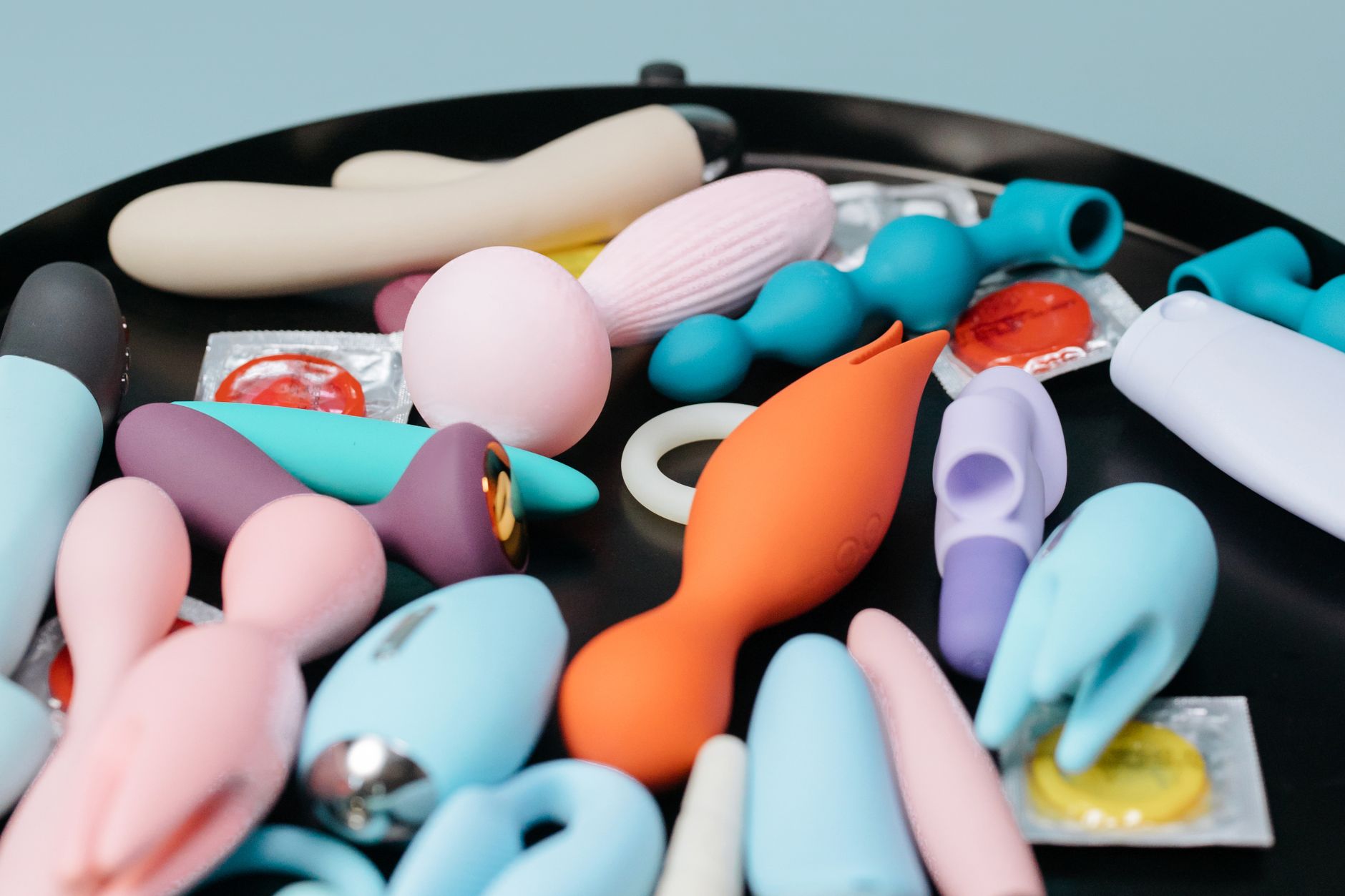
Why Lemon Vibrators Work Differently for Each Partner
Same toy, different nervous systems. Understanding the neuroscience of sensation variance helps couples stop blaming themselves and start exploring together.
One partner loves the Lemon vibrator. The other thinks it's just okay. Or one finds it intensely pleasurable, the other barely feels it. The immediate assumption is always the same: something's wrong with me, or they're not into it, or we're using it wrong.
Here's what changes sensation: nerve density, skin thickness, sensitivity to frequency, and how your spinal cord processes information. These aren't universal. They vary wildly between people, even in long-term couples.
The clitoris has anywhere from 8,000 to 15,000 nerve endings depending on who we're talking about. That's not a typo. Clitoral tissue thickness ranges from 2.5mm to 4mm. The area around it has different nerve distribution patterns in different people. When a lemon clitoral vibrator operates at, say, 3,000 hertz (3,000 vibrations per second), your nervous system interprets that frequency differently than your partner's does.
One person feels targeted, pleasurable stimulation. The other feels buzzy and scattered. Neither is wrong.
Most couples assume "stronger vibration equals better sensation." It's backwards. The frequency (how fast it vibrates) matters more than the amplitude (how much power it has).
Your body has preference thresholds. Some nervous systems are exquisitely tuned to lower frequencies (around 25-50 Hz). Others respond more to mid-range frequencies (80-120 Hz). Higher frequencies (200+ Hz) can actually feel less satisfying to some people because the nerve endings fire faster than the brain can process.
A lemon suction toy like Hello Nancy's Lem operates around 80-90 Hz, which puts it in that sweet spot for many people. But "many" isn't "everyone." Some partners will feel it as pure magic. Others will feel like they're missing something.
Hormones change nerve sensitivity daily. Estrogen and progesterone fluctuate in cycles (if you're menstruating) or decline more gradually (if you're past menopause). Testosterone, present in all bodies with ovaries, shifts too.
High estrogen phases tend to increase clitoral sensitivity. Higher progesterone phases can dull it. If one partner is cycling and the other isn't (or cycles differently on hormonal contraception), you're working with different baseline sensitivities. What felt perfect last week might feel undershooting this week. That's neurobiology, not a sign of failing desire.
Here's the part that changes how couples think about this: sensation isn't processed in the same part of the brain for everyone. Some people process vibration stimulus more in the sensory cortex (the thinking part). Others route it more through the limbic system (the feeling, arousal part).
When the stimulus goes straight to the limbic pathway, pleasure builds faster and feels more emotionally integrated. When it routes through the sensory cortex first, it can feel more like "I'm aware of sensation" than "I'm aroused." Neither is better. They're just different neural routes.
Partners often interpret this difference as "they don't like it as much" when really the signal is taking a different highway to the same destination.
Repeated stimulation causes a measurable decrease in nerve response over a session. This is called adaptation. Some nervous systems habituate faster than others. One partner might need to switch settings three times in fifteen minutes to maintain sensation. The other stays responsive to the same pattern throughout.
If you both start with a lemon vibrator at the same setting, your nerves are literally on different schedules. By minute ten, one of you may have adapted while the other is still building momentum.
This is crucial: arousal isn't a single state. It's a spectrum, and where you are on that spectrum changes sensation moment to moment.
When you're early in arousal, lower frequencies feel better. Tissues are less engorged, sensitivity is more diffuse. As arousal deepens, clitoral tissue becomes more turgid and more densely innervated. Suddenly a higher frequency that felt intense before feels just right.
If one partner is always at a deeper arousal state when you both start using a lemon clitoral vibrator, you're not starting from the same sensory baseline. One of you is already twenty percent of the way up the pleasure curve before the toy even arrives.
The clitoris has an external part (the glans, what you can see) and an internal part (the body and crura, the wishbone-shaped structure inside). Some people have a more exposed glans. Others have more tissue coverage. A lemon suction vibrator applies pressure differently depending on clitoral anatomy.
If you have a more protected clitoral structure, the suction works beautifully because it draws tissue into the chamber without harsh direct contact. If you have a more prominent glans, the same setting might feel like all suction, less vibration.
Here's where couples get stuck: one partner gets immediate, explosive pleasure from a lemon vibrator. The other needs longer, different settings, or just feels neutral. The first partner concludes "they don't respond to vibration" or "I'm more sensitive."
That conclusion usually leads to shame or resentment. Instead, it's just a call to personalization.
The truth is that you're not comparing two versions of the same nervous system. You're comparing two completely different sensory instruments.
Stop expecting the same toy to feel the same. That's the first shift.
Second, actually ask. "What frequency feels best to you?" "Does this setting feel like pleasure or just sensation?" "Do you need me to switch it up?" These aren't sexy questions, but they solve the problem.
Third, consider that what works changes. If you're using a lemon vibrator consistently, explore different patterns. Not because one of you is doing it wrong, but because adaptation means novelty matters.
Fourth, separate "I'm not into this" from "this isn't my particular sensation match right now." One is about desire. The other is about neurology.
If one partner experiences pain with vibration toys, that's not sensation variance. That's a signal to pause and potentially see a pelvic health specialist or a sex therapist. Pain is never part of sensory preference variation.
If one partner has genuinely zero response to vibration toys across settings and contexts, it's worth exploring with a sex therapist whether it's nervous system response, trauma, medication effect, or something else entirely. Many of those things are addressable.
Most couples think intimacy is about naturally wanting the same things. It's actually about being curious about difference and willing to adapt.
When you stop expecting your partner's nervous system to mirror yours and start treating their sensation profile as a fascinating puzzle to explore, that's when lemon vibrators (and every other shared experience) becomes genuinely connecting.
Your nervous systems are different. That's not a problem to solve. It's information to use.
Clitoral nerve density, skin thickness, and baseline hormone levels all vary. Your partner might have a higher nerve concentration in their clitoral tissue, or their arousal state when you start might be deeper. Additionally, the frequency of a lemon suction toy might match their particular nerve sensitivity better than yours. This is neurobiological variation, not a sign of lower desire from you.
Yes. Explore different settings and patterns rather than assuming one setting is "the right one." Ensure you're adequately aroused before introducing the toy. Use water-based lubricant, which can change how suction toys feel on tissue. Sometimes the issue is adaptation (your nerves have habituated to the current pattern), so switching patterns frequently helps. If nothing works, talk to a sex therapist.
Absolutely. If you menstruate, your clitoral sensitivity shifts across your cycle. High estrogen phases usually feel more responsive. When progesterone is dominant, sensitivity often dips. Hormonal contraception changes this pattern. If your sensitivity seems to cycle predictably, track it against your menstrual cycle or hormonal patterns to understand what's actually happening.
The frequency of the vibration and the way your spinal cord processes that signal matter more than the power. Some nervous systems process mid-range frequencies beautifully and intensely. Others find the same frequency scattered or overwhelming. Thicker clitoral tissue can also dull sensation from higher-frequency vibrators. It's not about the toy being "too much" or "not enough" universally. It's about fit.
Both approaches work, depending on context. Using the same toy takes turns teaches you about each other's preferences and pacing. Having individual toys matched to each person's nervous system tends to feel better during partnered sessions because you're both in your optimal sensation range simultaneously. There's no wrong choice. Try both and see what feels more connected.
Variation is normal. Pain is not. If vibration causes discomfort, numbness, or tingling beyond the session, talk to a pelvic health specialist. If there's zero sensation despite adequate arousal and time, and it's consistent across all toys and contexts, a sex therapist can help explore whether it's neurological, medication-related, trauma-related, or something else addressable. Normal variation feels neutral or pleasurable, sometimes more and sometimes less. Concerning symptoms feel wrong in your body.
Your lemon vibrator isn't one-size-fits-all because human nervous systems aren't one-size-fits-all. That's not a flaw in you or your partner. It's an invitation to stop guessing and start asking. When you do, you find out that sensation differences aren't obstacles to intimacy. They're the actual texture of it.