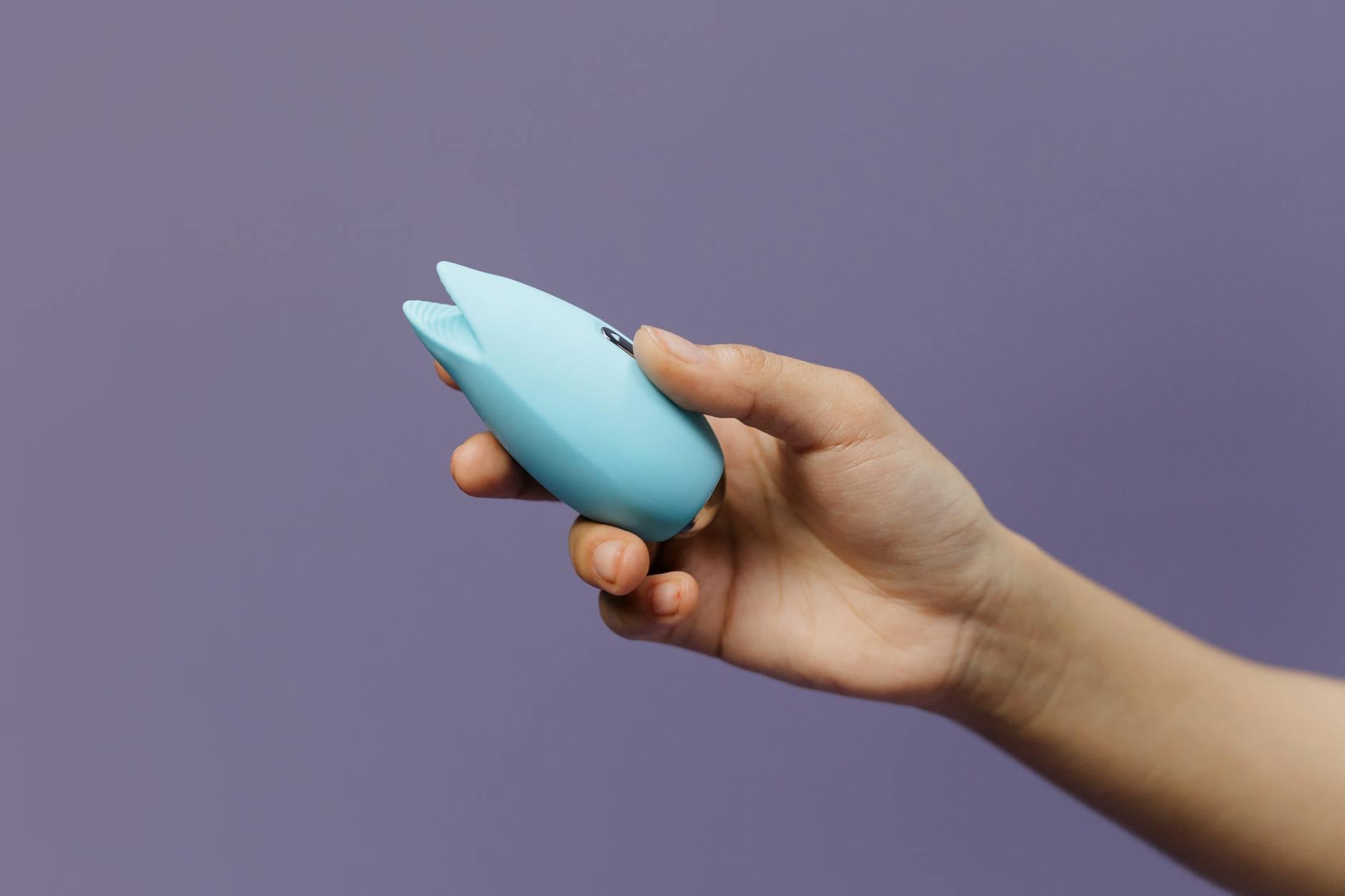
Why Lemon Vibrators Work Better for Rebuilding Arousal After Depression
Depression kills desire. But the circuits don't stay dead. Here's what changes in your brain and body during recovery, and why air-suction stimulation works when traditional approaches fall flat.
Let's be real. Depression doesn't just make you sad. It flattens everything. Your ambition, your appetite, your ability to laugh at jokes that used to land. And yes, your sex drive. That flatness isn't weakness or a moral failing. It's neurobiology. Serotonin, dopamine, and norepinephrine drop. The neural pathways that light up during arousal go quiet. Desire doesn't disappear because you stopped caring about pleasure. It disappears because your brain chemistry can't signal it anymore.
Here's what most people don't know: those pathways don't stay quiet forever. They can be rewired. And a lemon vibrator works better than most tools because of how it touches your nervous system.
When you're depressed, your body enters a conservation state. The prefrontal cortex (your thinking brain) goes offline. The amygdala (your fear and survival brain) takes over. Blood flow moves toward your core to protect you. Peripheral sensation dulls. Your clitoris, which depends on increased blood flow and neural sensitivity during arousal, gets deprioritized. Your brain literally stops sending the signals that say "this feels good."
Antidepressants help by raising neurotransmitters, but they often flatten sensation temporarily. SSRIs especially can reduce orgasmic capacity in the first weeks or months. This is cruel timing. You're starting to feel better emotionally, but your body feels numb. That numbness is why most people trying to rebuild arousal after depression fail with typical vibrators. They don't provide enough sensory input to break through the fog.
A lemon clitoral vibrator works differently. The air-suction mechanism doesn't rely on traditional vibration. It creates gentle pulses of negative pressure, which stimulates nerves without the kind of friction that can feel overwhelming when sensation is already compromised. For someone rebuilding arousal pathways, that's crucial.
Your nervous system has two states: sympathetic (fight-or-flight) and parasympathetic (rest-and-digest). Depression pushes you into a third state: freeze. When you're depressed, even thinking about pleasure can activate your threat response. Your body tightens. Your breath shallows. Arousal becomes impossible because your nervous system isn't signaling safety.
Gentle, consistent stimulation—the kind a lem vibrator provides—sends a different message to your vagus nerve. It says: "This is safe. This is pleasant. You can stay here." The pulsing rhythm of air suction, when kept at lower intensities, doesn't jolt or overwhelm. It invites. That's the difference between a tool that triggers you and one that gradually rewires you.
Research on polyvagal theory (developed by neuroscientist Stephen Porges) shows that repetitive, predictable touch retrains your autonomic nervous system. Your parasympathetic nervous system starts to recognize stimulation as safe. Over time, this retraining lowers your arousal threshold. You need less effort to feel pleasure. That's recovery.
Here's what I tell clients rebuilding arousal: forget everything you thought you knew about what feels good. Your baseline has shifted. Traditional vibrators often feel too intense or, worse, numb. You need something that works at the edges of your current sensation, not at the edges of what used to work.
A lemon vibrator's lower intensity settings are engineered for exactly this. Start at setting one. Spend 10-15 minutes there, even if nothing happens. Your nervous system is learning that this is safe. After a week, you might move to setting two. You're not chasing an orgasm. You're rebuilding the circuit.
Many of my clients report that they felt the first genuine flicker of arousal in months after two to three weeks of this gentle, consistent practice. That flicker is the pathway coming back online. It's not dramatic, but it's real.
Let me be direct about why other tools often fail during recovery. Traditional bullet vibrators provide consistent, high-frequency vibration. That works for many people. But when your nervous system is still learning to trust sensation, high frequency feels chaotic. It bypasses the gentle retraining phase.
Manual stimulation or hand vibrators require presence and coordination that depressed brains often can't muster. You have to pay attention, move at the right pace, maintain pressure. Depression makes all of that exhausting.
A lem vibrator does the work. You guide it, but the pulsing rhythm is handled. The sensation is predictable. And the air-suction mechanism has been shown in user feedback to feel markedly different from traditional vibration, especially for people recovering from medication-induced numbness or depression-related desensitization. It's not overloading your system. It's coaxing it back to life.
One of the cruelest parts of depression is that you have to rebuild pleasure while you're still depressed. The motivation isn't there yet. You're doing this on faith, basically.
That's why routine matters. Set a specific time. Two or three times a week, sit down for 20 minutes. Not because you're in the mood, but because you're retraining your nervous system. Your mood will catch up. I've seen it happen in dozens of clients. The sensation comes first. The desire follows.
During this recovery phase, partner support makes a difference. If you have one, a brief conversation helps: "I'm rebuilding arousal. This isn't about you or us. It's about my nervous system remembering how to feel good." That takes the pressure off. Pressure is the enemy of recovery.
After four to six weeks of consistent, gentle practice with a lemon vibrator, something shifts. Your threshold lowers. Sensation becomes richer. You might start exploring different settings or adding lubrication, which creates a different quality of sensation. This is when you're ready to experiment.
Some people layer in partnered stimulation. Others explore longer sessions. Some find that their body now responds to sensations it ignored before. That expansion happens naturally when the circuit is rewired. Don't force it.
This deserves its own section because it's the piece that gets skipped. Depression isn't just chemical. It's also a story you've internalized: "I'm broken. I'll never enjoy things again. Pleasure isn't for me." Recovery isn't just rewiring neurons. It's also telling yourself a different story.
Every time you show up for a session with your lem vibrator, even when you don't feel like it, you're telling your nervous system and your mind: "I deserve to feel good. I'm worth this work." That's not toxic positivity. That's fundamental recovery.
If you're also working with a therapist (which I recommend during depression recovery), mention this practice. It's part of your healing. It deserves to be named.
If you're rebuilding arousal after depression and you're not seeing any shift in sensation after six weeks of consistent practice, something else might be at play. Medication side effects. Unresolved trauma. Relationship disconnection. Talk to your prescriber if you're on antidepressants. They can adjust timing, dosage, or medication type. Libido problems are real medical issues, not character flaws.
If depression keeps pulling you back under, your arousal recovery won't stick. Keep building your mental health support alongside your physical recovery. These things move together.
It varies. Most people notice the first flicker of sensation within three to six weeks of consistent practice. Full recovery of your previous arousal capacity can take three to six months. Depression recovery is slow. Your sexual recovery usually mirrors your overall recovery timeline. Be patient with the process.
Absolutely. In fact, a lemon clitoral vibrator is often more helpful for people on SSRIs because it provides strong enough sensation to work through the numbness those medications can create. Start low and go slow. Your nervous system will adjust. If numbness persists after six weeks, talk to your prescriber about dosage or medication timing.
Completely normal. Depression has dulled your sensation. A lemon vibrator sends consistent stimulation, but your brain might not recognize it as pleasure yet. Keep showing up. The recognition comes before the feeling. Then the feeling arrives.
Start alone. Your nervous system needs to know it's safe without the added layer of partner presence. After four to six weeks of solo practice, you can introduce a partner if you want. But solo recovery is perfectly valid. This is about rewiring your own nervous system, not performing for anyone else.
A lemon vibrator can help you feel sensation and rebuild arousal circuitry, but it won't fix medication-induced sexual side effects directly. That conversation belongs with your prescriber. That said, having a tool that works despite the medication side effects helps you maintain sexual practice during recovery. Many people find they respond better to air-suction toys like the lem when traditional vibrators aren't cutting through the numbness.
Yes, it can. That's not failure. If you experience another depressive episode, you know how to rebuild. You've done it once. You can do it again. The difference is you have a map now.
Rebuild arousal after depression isn't about becoming who you were before. It's about discovering who you are now, and letting yourself feel good in this version of your life. A lemon vibrator is just a tool. But it's one designed for exactly this moment. For gentle rewiring. For inviting your nervous system back into pleasure. For telling yourself that you deserve to feel something good again.
If you're working through this right now, you're doing hard, quiet, brave work. Keep going. Your pleasure is coming back.