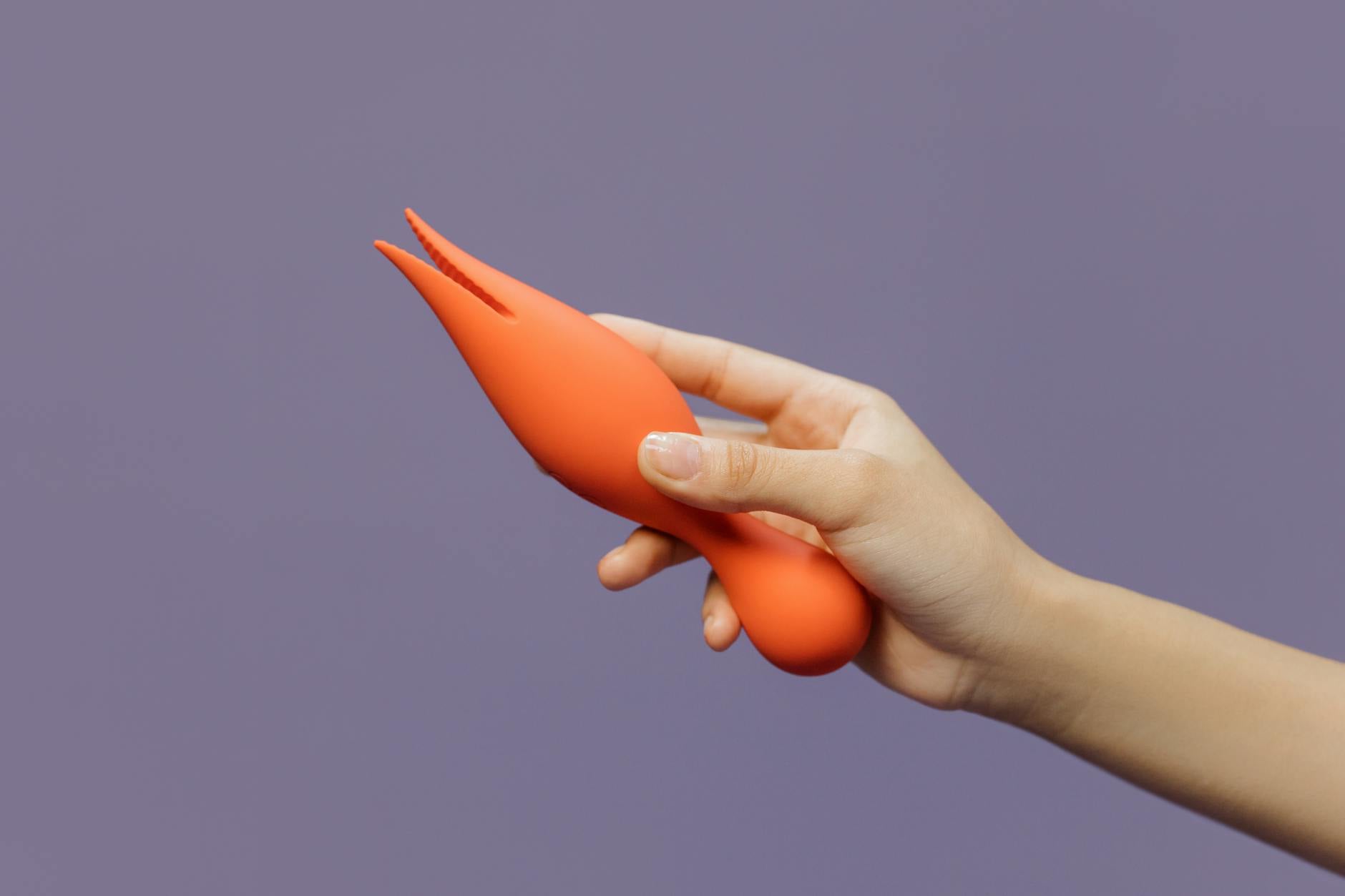
You pick up your lemon vibrator. You've got 20 minutes. The settings are the same as always. But halfway through, something feels off. The suction pattern that usually sends you somewhere feels distant, muted, like watching pleasure happen to someone else instead of experiencing it yourself.
You're not broken. Your toy isn't failing. Your brain just checked out.
Distraction doesn't just make pleasure feel less intense. It actively rewires how your nervous system processes sensation. When your attention splits between the moment and your to-do list, your body literally stops sending the same signals to your brain. This is neuroscience, not failure. And it's completely fixable once you understand what's happening.
Here's the thing about pleasure and attention. Your brain has a limited amount of processing power. When you're thinking about work emails, your partner's mood, or whether you locked the door, you're running two operating systems at once. That splits your bandwidth.
The clitoris has about 8,000 nerve endings. All of those are constantly sending data to your brain. But your brain only pays attention to input it deems important. When your focus is elsewhere, your brain downregulates the sensory signal from your lemon clitoral vibrator. It's not that the vibrator is producing less sensation. It's that your brain is filtering it out as background noise.
This filtering happens automatically. You don't decide it. But understanding it means you can work with it instead of against it.
Pleasure isn't just sensation. It's a chemical cascade. When you're focused on the moment, your brain releases dopamine (wanting and anticipation), oxytocin (connection), and serotonin (contentment). These chemicals sensitize your nerve endings and make stimulation feel more intense.
When you're distracted, your brain is producing cortisol and adrenaline instead. Those stress hormones literally suppress the production of pleasure chemicals. Your lemon vibrator could be running at full intensity and your body would still experience it as muted because the neurochemical environment has changed.
This is why the same device feels wildly different depending on your mental state. It's not inconsistency. It's neurobiology.
Distraction during pleasure isn't weakness or lack of desire. It's usually one of four things.
First, there's task anxiety. You've scheduled 20 minutes for this and you're thinking about the next thing on your calendar. Your nervous system is in future-focused mode instead of present-focused mode. Time pressure collapses pleasure.
Second, there's performance pressure, often disguised as self-consciousness. You're watching yourself have pleasure instead of having it. You're narrating the experience instead of living it. If you have a partner nearby, or if you're thinking about what a partner might think, this intensifies fast.
Third, there's ambient stress. Your job is stressful. Your relationship has tension. You're sleep-deprived. Your nervous system is already in a low-level state of alert. When you try to access pleasure, you're fighting against that baseline activation. Your lemon clitoral vibrator feels weak because your body is running a different operating system.
Fourth, there's what I call novelty hunger. You've used your vibrator the same way for months. Your brain stops registering it as novel stimulus. The sensation becomes predictable, and predictable input gets filtered out. Your attention naturally drifts because the stimulus isn't registering as interesting anymore.
The solution isn't to try harder or feel guilty. It's to create conditions where distraction is harder and presence is easier.
1. Negotiate time like it matters. Tell whoever you live with that you need 30 minutes where you won't be interrupted. Don't apologize for it. Close the door. Silence your phone. If you live alone, still do this. The ritual signals to your nervous system that this time is protected.
2. Start with a body check. Before you touch yourself, spend two minutes noticing what's happening in your body right now. Where's tension? Where's ease? What temperature is your skin? This isn't meditation. It's a reset button. You're anchoring your awareness in physical sensation before you layer stimulation on top.
3. Use your breath as an anchor. When your mind starts wandering, sync your breathing with the vibration pattern. If your lemon vibrator pulses, breathe in for three pulses, out for three pulses. This gives your brain a simple job. It keeps you tethered to the moment without requiring you to think.
4. Change the environment. If you always use your lemon sexual toys in the same place at the same time, your brain stops paying attention. Shift the location. Change the lighting. Try it at a different time of day. Novelty forces your attention back to the experience.
5. Remove the goal. If you're focused on reaching orgasm, you're not present. Orgasm is an outcome, and outcomes live in the future. Instead, spend 10 minutes just exploring sensation without expecting it to lead anywhere. Notice what patterns feel good. Notice how the suction changes throughout. This shifts your brain from goal-oriented to exploratory.
6. Name what you're noticing. Internally narrate in real time, but narrate sensation, not judgment. "The suction is stronger on the left side." "This pattern makes my whole pelvis tighten." "This feels like a building wave." Narration keeps your prefrontal cortex engaged in present-moment observation instead of worry.
Here's something that's not talked about enough. It's harder to stay present when you're not very aroused. Low arousal is like trying to watch a boring movie. Your attention naturally drifts.
But arousal builds. It's not an on-off switch. If you give your body 10 to 15 minutes before you introduce a lemon clitoral vibrator, arousal will build naturally and your attention will follow. You'll have more dopamine and oxytocin in your system. You'll be more able to focus.
This is why slow matters. It's not about romance or performance. It's about giving your nervous system time to shift from alertness to pleasure mode.
If you're consistently unable to stay present with your lemon vibrator or with a partner, and it's happening across contexts, it might be worth exploring whether something else is going on. Persistent distraction can be a sign of anxiety, depression, or relationship disconnection that's worth naming and addressing.
That's different from situational distraction, which is normal and manageable. But if it's a pattern, talking to someone trained in the intersection of pleasure and psychology can help you figure out what's actually happening underneath.
You don't need to force yourself to be present. You need to create conditions where presence is easier. Your nervous system will cooperate with you if you give it time, safety, and novelty. Your lemon vibrator isn't broken. Your attention is just doing what attention does when the conditions aren't set up to support focus.
Start with one thing from the list above. Try it for a week. Notice what shifts. Your pleasure isn't somewhere in the future waiting to be accessed. It's available right now if you can make space for it.