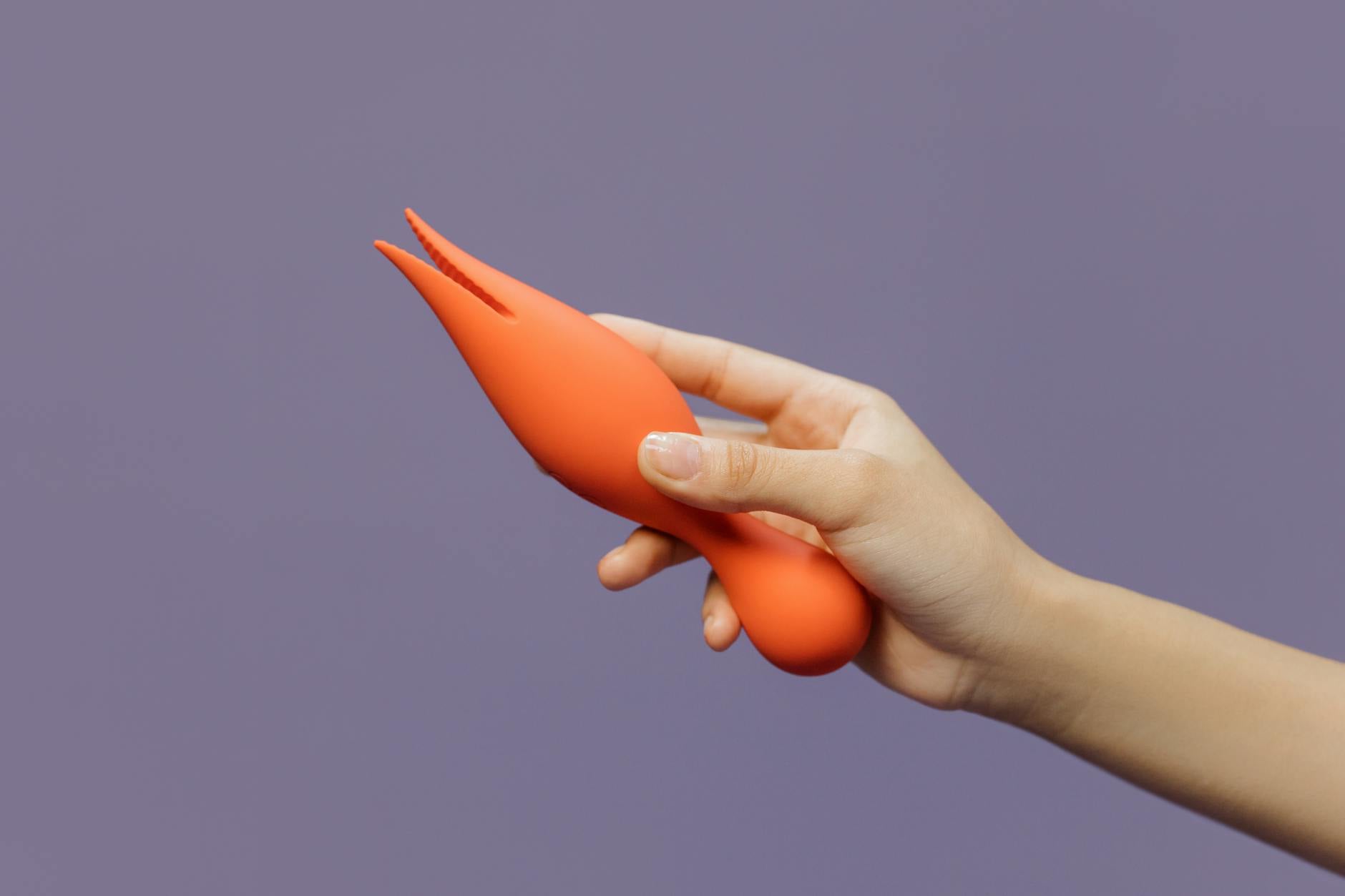
It's not broken pleasure. Your nerves are aging normally. Here's what actually happens to sensation as you get older, and why a lemon clitoral vibrator works differently at 50 than it did at 30.
You used to feel everything on setting three. Now you're on five or six and wondering if your lemon vibrator is dying, or if something's wrong with you. Nothing's wrong. Your nervous system is aging exactly like it's supposed to.
Sensitivity loss with age is neurological, not psychological. Your clitoral nerves aren't suddenly lazy. They're experiencing a normal decline in nerve conduction velocity. That means the signal between your body and your brain takes slightly longer to travel. You're not less capable of pleasure. You're just operating on a slightly different timeline.
Here's the thing nobody explains clearly: your nervous system doesn't wear out. It reorganizes. Nerve conduction velocity drops about 10 percent per decade after age 30. That doesn't sound like much until you're using your lemon sexual toy and realizing that the intensity that used to make you come in three minutes now takes six.
Three changes happen in parallel.
First, myelination thins. The insulation around your nerve fibers degrades slightly. This makes signals travel more slowly, but it doesn't make them stop. It's like adding a few microseconds of delay to every sensation.
Second, receptor density decreases. Your skin and deeper tissue have fewer mechanoreceptors (the sensory cells that detect touch and vibration). Studies show a 25 to 30 percent decline in cutaneous receptor sensitivity between age 20 and age 70. That's a real number, and it matters for how intensely you feel vibration.
Third, blood flow to nerve endings becomes less efficient. Nerves need oxygen to fire properly. When circulation gets even slightly compromised, peripheral sensation gets softer.
Combine those three, and you've got a situation where a lemon vibrator that felt explosive at 35 feels comforting at 55. Neither experience is wrong. They're just different.
Most people blame the device. The lemon sucker is fine. What's changed is the speed at which your nervous system processes the signal.
This is where understanding the mechanism helps you use your toy better. Instead of fighting against the change, you work with it.
Longer warm-up time becomes your friend. Because your nerve conduction is slower, arousal literally takes longer to build. Budget 15 to 20 minutes instead of 5. This isn't a problem. It's an opportunity to extend pleasure and deepen attention.
Higher intensity settings aren't weakness. Moving from pattern two to pattern four or five is normal. Your lemon sexual toy has those settings for a reason. Using them doesn't mean you've lost capacity. It means you're matching the actual physiology of your aging nervous system.
Sustained stimulation works better than rapid switching. Because your nerves are slower to send signals, switching patterns constantly can actually work against you. Stay on one setting for 30 to 60 seconds, let the sensation build, then adjust if you want to.
Nerve aging isn't the whole story. Hormones matter too, especially if you're approaching or in menopause. Estrogen supports nerve function, including in the clitoral nerves and surrounding tissue. When estrogen drops, sensation can feel softer even if your nerves are otherwise healthy.
If you're also experiencing vaginal dryness, thinner tissue, or a general sense of diminished pleasure, ask your doctor about hormone levels. You don't have to assume sensitivity loss is purely age-related when hormones might be part of it.
Similarly, blood pressure medications, antidepressants, and diabetes can all affect nerve sensation. If the drop in sensitivity feels sudden rather than gradual, it's worth talking to your doctor. Sometimes a medication adjustment or a different dosing schedule helps.
Invest in a higher-intensity lemon vibrator. The Lemon clitoral vibrator has adjustable patterns and power levels. If your older toy isn't giving you what you need anymore, it's not a failure. It's a sign you need a device that meets you where you are. There's no shame in that. Your pleasure matters at every age.
Use your toy more slowly and with more intention. Instead of rapid patterns, find one setting and sit with it. Let your slower nerve conduction catch up. Many people in their 50s and 60s report that this deliberate pace feels more satisfying than the rushed intensity they chased when they were younger.
Incorporate other sensations. Combine your lemon sexual toy with touch, temperature, or a partner's involvement. Multi-sensory stimulation travels on different nerve pathways. When you layer sensations, you activate more of your nervous system at once, which can feel richer even if individual sensations are slightly softer.
Pay attention to what's actually happening with your body. Sensitivity loss is gradual and normal. But if you're experiencing sudden numbness, sharp pain, or sensation that's completely absent in one area, see a doctor. That's not normal aging. That's something that needs evaluation.
Here's what I see in my practice: couples hit their 50s, sensation shifts, and they panic. They think the relationship is broken or their body is broken. What's actually happening is a normal recalibration.
The fear is worse than the change. You start avoiding pleasure because you're afraid it won't feel the same. Then it definitely doesn't feel the same, because you're braced against it instead of moving into it.
If you have a partner, tell them what's happening. Not in a sad way. In a factual, logistics way. "My nerves respond a bit slower now, so I need longer warm-up and higher intensity." That's not a confession of failure. It's useful information.
If you're solo, give yourself permission to adjust your technique without judgment. The person you were at 30 isn't the person you are now. Your pleasure practice should evolve with you.
Gradual sensitivity loss with age is normal. Sudden loss, sharp pain, or numbness in one spot is not. If you're experiencing any of those, get it evaluated. Peripheral neuropathy, nerve compression, or vascular issues can all affect sensation and are worth ruling out.
Also talk to your doctor if you're on medications that might affect nerve function. Sometimes a different medication or a dosing adjustment helps without you having to overhaul your whole approach to pleasure.
If you're in or approaching menopause and sensation has really tanked, hormone therapy or topical estrogen can make a genuine difference in how your clitoral nerves function. It's worth the conversation.
You don't lose capacity for pleasure as you age. You lose the kind of pleasure that depends on speed and shock. What you gain access to, if you're willing to adjust, is pleasure that's slower, deeper, and often more sustainable. You can have an orgasm that takes longer to build but lasts longer once it arrives. That's not loss. That's a trade, and for most people I work with, it's a better one.
Your lemon clitoral vibrator isn't broken. Your nervous system is just operating the way nervous systems do after decades of good work. Adjust your expectations, adjust your intensity, adjust your timeline. Your pleasure is still there. It just speaks a slightly different language now.
Your nerve conduction velocity slows with age, which means sensations take slightly longer to register. You also have fewer mechanoreceptors in your skin now than you did at 30. That combination makes the same vibration feel softer. It's not your device. It's normal aging. Moving up to a higher intensity setting or extending your warm-up time usually solves it.
Short answer: no, not from aging alone. If you've been using the same lemon sexual toy at the same intensity for years, your brain might have adapted to it through habituation. Taking a break for a week or two often restores sensation. If sensitivity loss is sudden and localized to one area, see a doctor to rule out nerve compression or other issues.
No. Higher intensity doesn't damage healthy nerves. Your aging nerves actually function better when they're stimulated appropriately for your current physiology. It's like exercise. Using your muscles at an appropriate level keeps them healthier than avoiding use because you're worried about wear.
You can't stop nerve aging, but you can support overall nerve health through exercise, sleep, and managing blood sugar and blood pressure. Regular aerobic exercise improves circulation to nerve endings. Good sleep supports nerve repair. Controlling blood pressure reduces nerve damage. These don't reverse aging, but they do keep your nervous system as healthy as it can be at your age.
Not necessarily. If your current toy still works for you, keep it. If you find yourself consistently reaching for higher intensities than your device offers, or if you want to explore patterns or features you didn't care about before, upgrading makes sense. There's no rule. Use what feels good right now.
Absolutely. Menopause drops estrogen, which affects nerve function independent of your age. Birth control, thyroid issues, and other hormonal shifts can all change how intensely you feel stimulation. If sensitivity loss coincides with a hormonal change, talk to your doctor. Sometimes addressing the hormone issue helps with sensation too.