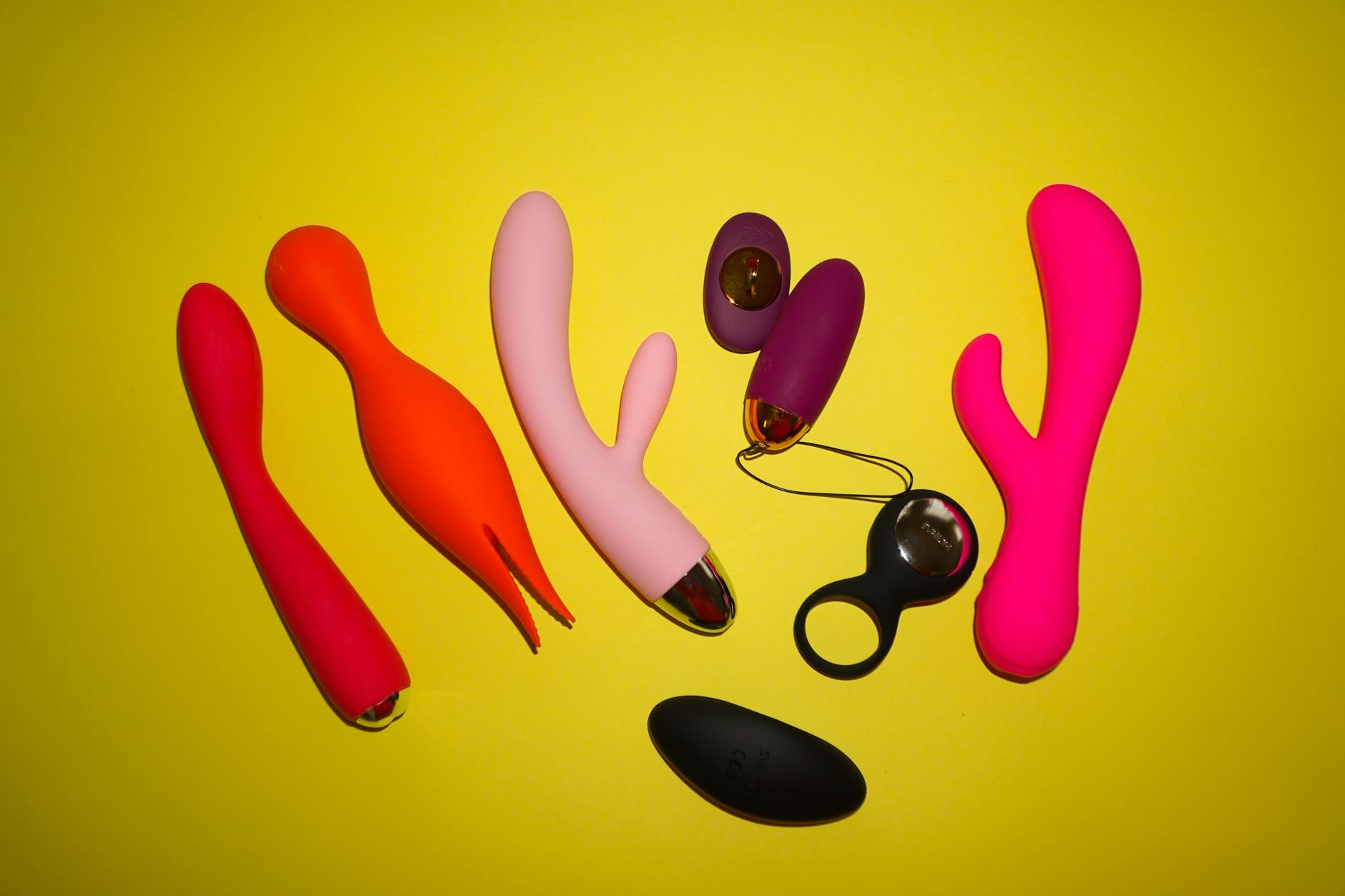
Why Lemon Vibrator Orgasms Feel Different After Starting Birth Control
Your body didn't break. Hormonal shifts from contraceptives change arousal speed, sensation depth, and what turns you on. Here's what's happening and how to recalibrate.
You get a new prescription, your doctor says "take it daily," and you do. Then a few weeks later, you're using your lemon clitoral vibrator and something feels off. Orgasms arrive slower. They feel less intense. Your libido is quieter than before. So you panic and think your body is broken.
It's not. Birth control shifts your hormonal landscape in ways that absolutely change how you experience pleasure. That's not a side effect you should hide from. It's information you should use.
Most hormonal contraceptives work by suppressing the luteal phase of your cycle. This means steady, synthetic estrogen and progestin instead of the natural peaks and valleys you had before. That's the whole point. But a steady hormonal state also means a steady baseline for desire and sensation.
Here's what changes:
Testosterone drops further. Your ovaries still make some testosterone, but hormonal birth control suppresses it. Testosterone is a major driver of spontaneous desire and clitoral sensitivity across all bodies. Less testosterone often means arousal takes longer to build. You might need 20 minutes of foreplay instead of 5. That's not low libido. That's a different arousal curve.
Sensation can feel muted. This isn't universal, but many people report that direct touch feels less sharp, less immediately pleasurable. Some describe it as touching their skin through a thin membrane. With a lemon vibrator, you might notice the suction feels softer. The intensity you loved on setting 4 now feels right at setting 6.
Orgasms sometimes arrive later but can feel deeper. This is the plot twist nobody warns you about. Because your arousal builds differently, your orgasm sometimes has a longer runway. That can mean it arrives with more depth, more full-body sensation, and less surface-level intensity.
Your body's response time stretches. Lubrication might be slightly slower to arrive. Nipple sensitivity might change. The speed at which your clitoris engorges with blood shifts. These aren't problems. They're data points.
Combination pills (estrogen plus progestin) usually affect arousal more noticeably than progestin-only methods. The synthetic estrogen can dull sensation. Some people feel it instantly. Others take three months to notice.
The copper IUD doesn't use hormones, so it's an option if hormonal shift is the issue. But plenty of people on copper IUDs also report arousal changes because having any IUD in place can shift how your pelvic floor feels and responds.
The implant and hormonal IUDs (like the Mirena) release lower doses of progestin directly to your uterus, so systemic effects are often less dramatic. Some people experience no change at all.
The patch and the ring have similar effects to the pill, just with different absorption methods.
None of this means you made a wrong choice. It means you're gathering information about your body so you can support your own pleasure intentionally.
Three concrete shifts that most people find useful:
Start longer. Budget 20-30 minutes for foreplay instead of trying to go from zero to orgasm in 10 minutes. Your arousal isn't broken. It's just operating on a different timeline. That runway can be genuinely pleasurable if you stop fighting it. Solo pleasure with a lemon vibrator actually becomes easier because you control the pace entirely. You're not trying to match someone else's speed.
Experiment with higher intensities. If your usual setting on a lemon clitoral vibrator used to feel perfect and now feels too soft, move up. The Lem vibrator has nine settings. You might find that settings 5-7 give you the sensation you're looking for. This isn't desensitization. It's recalibration. Your sensitivity threshold shifted. Your capacity for pleasure didn't.
Pay attention to your cycle within the cycle. Even on hormonal birth control, small fluctuations happen. Placebo weeks (the seven days of non-hormonal pills) sometimes feel different from active weeks. Some people find their arousal lifts slightly during placebo week. Others feel no difference. Track what you notice.
If orgasms feel harder to reach and you're three months into a new prescription, this is normal territory. Most people stabilize around month three or four.
If orgasms feel completely absent and you're not having penetrative sex or other stimulation that might also change with hormonal shifts, talk to your doctor. Some people genuinely don't respond well to certain birth control formulations. Other options exist.
If pain appears during sex, especially with penetration, that's not an arousal issue. That's worth a gynecology conversation because hormonal birth control can change lubrication in ways that create friction.
If your desire vanished and you feel flat across your whole emotional landscape, not just sexually, that can be a sign that the specific hormonal formulation isn't right for you. Depression and anhedonia are documented side effects of some contraceptives. You don't have to accept that as the cost of contraception.
Separate the conversation. Don't say "the birth control killed my sex drive" in a way that sounds like it's about your partner. Say "my arousal timeline changed, and here's what I need to feel good." Those are different statements.
If longer foreplay is now required, make that explicit. Show them what you like. If you're using a lemon vibrator and you know that solo play with it feels better now than it did before, explain that. Your partner doesn't need to feel replaced by a vibrator. They need to understand that you're learning your body and inviting them to do that with you.
Many people find that talking about these shifts actually deepens intimacy because it requires honesty and attention. You're not pretending everything is the same. You're saying "here's what I discovered about myself."
Birth control changes are temporary in the sense that you can always adjust, switch methods, or stop. They're not permanent rewiring of your pleasure capacity. Plenty of people find that after a few months on a new prescription, sensation normalizes. Others find their new baseline is actually better.
What matters is that you're paying attention to what's happening in your body instead of assuming something broke. Orgasm quality changes sometimes. That's information, not failure. A lemon clitoral vibrator is a useful tool for understanding your own response because it takes another person out of the equation and lets you explore your own sensation on your own timeline.
Your pleasure deserves that kind of attention. Your body deserves to be understood, not just tolerated.
Does birth control permanently change orgasm sensation?
No. Your baseline arousal and sensation can shift on hormonal birth control, but these changes are usually reversible. If you stop the medication or switch formulations, sensation often returns to your pre-birth control baseline within one to three menstrual cycles. Some people find their pleasure actually improves once the adjustment period ends because they understand their body better.
Can I use lemon sexual toys the same way on birth control as I did before?
Most people need to adjust their approach slightly. If you loved using a lemon vibrator on setting 3 before birth control, you might find setting 5 feels right now. The technique stays the same. The intensity might need to increase. Some people also find they need more direct stimulation or longer warm-up time. Think of it as learning your body again, not as something being wrong.
Will my arousal come back if I switch birth control methods?
Maybe. Some people switch from a combination pill to a progestin-only method or a copper IUD and notice their libido lifts immediately. Others don't feel a difference. It depends on whether the specific hormonal formulation was the culprit or whether other factors are also at play. If arousal doesn't return after switching, that's worth exploring with both a gynecologist and potentially a therapist, because hormonal issues are real but so are relationship dynamics, stress, and emotional connection.
Is it normal for orgasms to feel less intense on birth control?
Yes, and it's also normal for them to feel deeper or different without being less intense. "Less intense" often means less sharp, less immediate sensation. That's different from less pleasurable. Many people find that once they adjust their technique and stop bracing for the orgasm they used to have, the new sensation is actually richer. The change is real. The disappointment is optional.
How long does it take to adjust to birth control changes in pleasure?
Three to four months is the typical window. Your body is constantly recalibrating to new hormonal signals. Some people notice changes immediately. Others feel nothing different for weeks and then suddenly notice shifts. If you're five or six months in and still feeling completely disconnected from your body, that's worth a conversation with your prescriber. It might not be the right contraceptive for you.
Should I stop birth control if it's affecting my orgasms?
That's a decision only you can make with your doctor, weighing contraceptive efficacy against quality of life. Birth control does other things besides prevent pregnancy. It might clear your skin, regulate your period, reduce cramps, or stabilize your mood. Those benefits might outweigh the arousal shift. Or they might not. But don't assume you have to choose between protection and pleasure. Sometimes switching methods solves both.